
Stand in front of your closet on a Tuesday morning. You reach for the navy sweater again, and the same coral blouse stays on the hanger — third week in a row. You bought that coral on sale, swore it was your color, and yet every time you try it on, your face looks tired. That’s not bad luck. That’s your undertone trying to tell you something.
If you’ve been asking what season am I color analysis can answer — and answer well — you’re in the right place. The 12-season system is the most accurate framework we have for figuring out which colors make your skin glow and which ones quietly drain you. Let’s walk through it the way a good stylist would, with real examples and no mystical language.
What Personal Color Analysis Actually Is
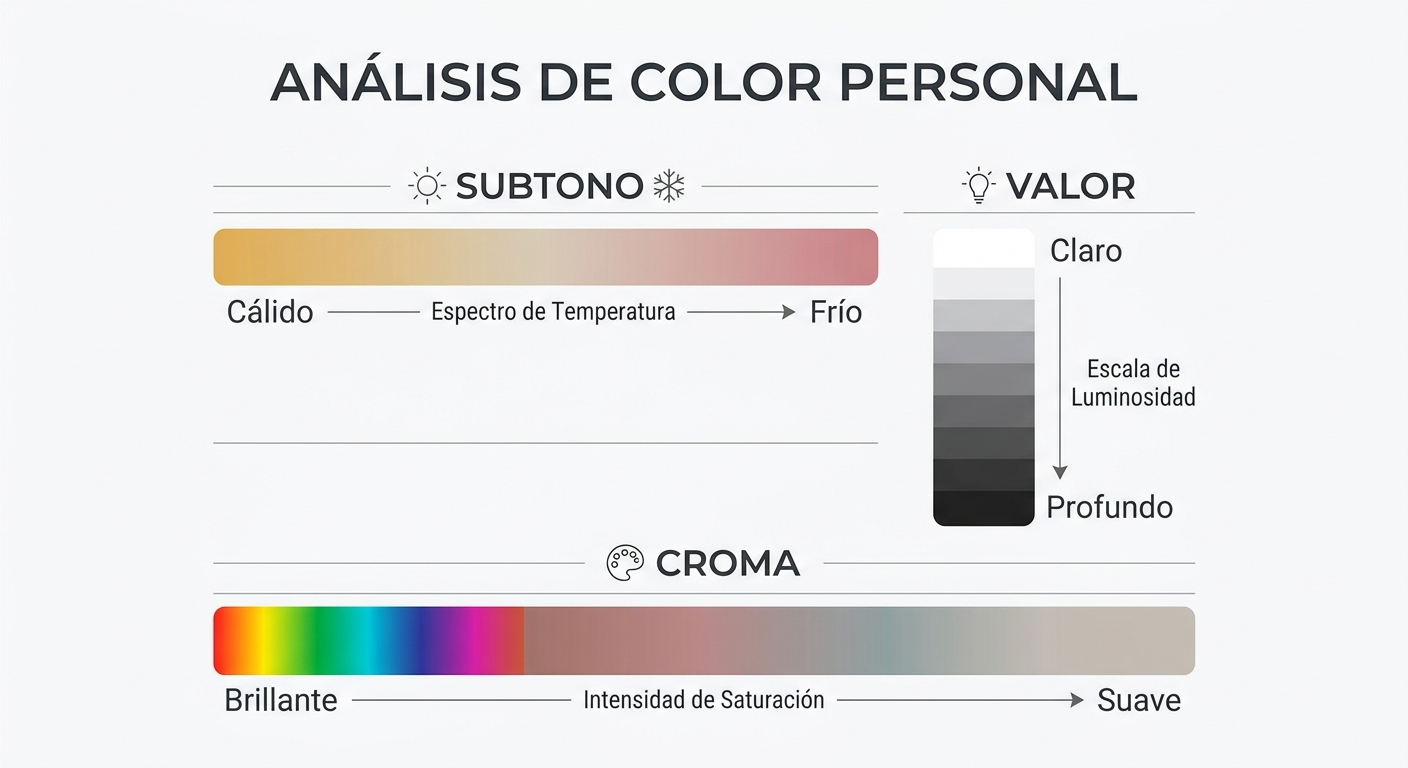
Personal color analysis (PCA) is the process of identifying the palette of colors that harmonizes with your natural coloring — your skin’s undertone, the depth of your features, and how much contrast lives in your face. It’s not about your favorite color. It’s about which colors return the favor when you wear them.
The system most US stylists use today divides people into 12 seasons, expanded from the original four (spring, summer, autumn, winter) developed in the 20th century. You can read more on the history of personal color analysis on Wikipedia, but the short version is this: your coloring sits somewhere on three axes — warm to cool, light to deep, and bright to soft. Where those three meet is your season.
The three dimensions of color
- Undertone: warm (golden, peachy, yellow) or cool (pink, rosy, blue-based). Neutral falls in between.
- Value: how light or deep your overall coloring is. Think of a black-and-white photo of yourself — are you a high-key or low-key image?
- Chroma: how bright (clear, saturated) or soft (muted, dusty) your features read. A bright chroma face holds up to a fire-engine red. A soft chroma face gets eaten alive by it.
Why “What Season Am I Color Analysis” Matters More Than You Think
Most people shop by category — “I need a black blazer” — instead of by harmony. The result is a closet full of items that technically work but never quite sing. When you know your season, three things change. You stop wasting money on returns. You start getting compliments on your face instead of your outfit (“you look so rested!”). And getting dressed takes about half the time.
There’s a reason image consultants charge $200 to $600 for a session: the ROI on knowing your colors lasts decades. Your season doesn’t change with trends. It barely changes with age.
The 12 Seasons, Quickly Explained
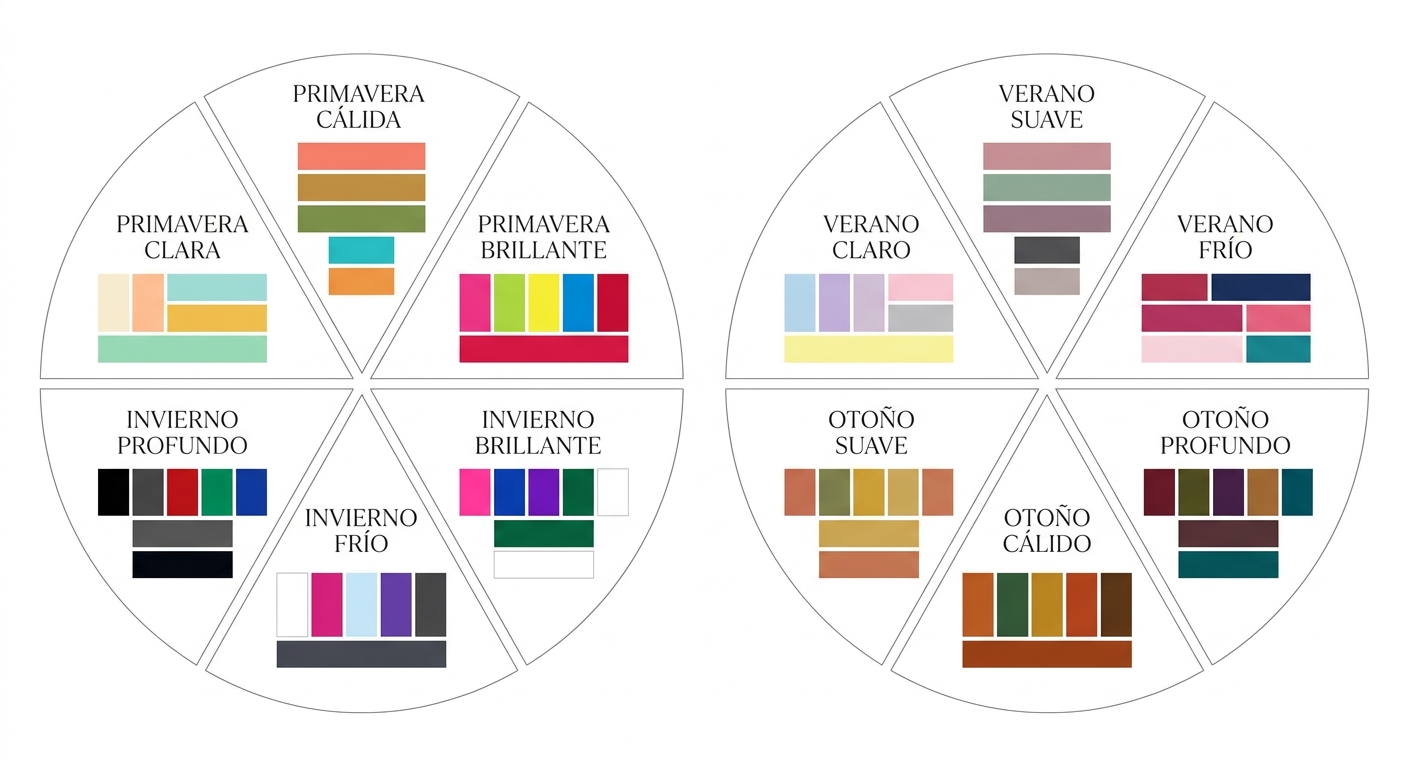
Each of the four classic seasons splits into three sub-seasons, depending on which dimension dominates. Here’s the cheat sheet most stylists keep in their heads.
| Season | Undertone | Value | Chroma | Vibe |
|---|---|---|---|---|
| Light Spring | Warm-neutral | Light | Bright | Sunlit, fresh |
| Warm Spring | Warm | Medium | Bright | Golden, juicy |
| Bright Spring | Warm-neutral | Medium | Very bright | Clear, vivid |
| Light Summer | Cool-neutral | Light | Soft | Powdery, gentle |
| Cool Summer | Cool | Medium | Medium | Rose garden |
| Soft Summer | Cool-neutral | Medium | Soft | Hazy, smoky |
| Soft Autumn | Warm-neutral | Medium | Soft | Vintage, dusty |
| Warm Autumn | Warm | Medium-deep | Medium | Spice market |
| Deep Autumn | Warm-neutral | Deep | Medium | Rich, earthy |
| Deep Winter | Cool-neutral | Deep | Bright | Jewel tones |
| Cool Winter | Cool | Medium-deep | Bright | Icy, regal |
| Bright Winter | Cool-neutral | Medium | Very bright | Electric, crisp |
How Do You Know If You’re Warm, Cool, or Neutral?
This is where most at-home tests fall apart. The “look at your veins” trick is a starting point, not a diagnosis. Blue veins suggest cool, green suggest warm — but the lighting in your bathroom, the color of your countertop, and the time of day all skew the read. Still, here are the home cues that work reasonably well when you stack them together.
The jewelry test
Hold a silver chain against your bare neck in natural daylight, then a gold one. If silver makes your skin look smooth and your eyes brighter, you’re cool-leaning. If gold warms your face and silver makes you look gray, you’re warm-leaning. If both look fine, you may be neutral — which is more common than the internet admits.
The white test
- Pure optic white near your face: flatters cool seasons (especially winters), washes out warm seasons.
- Ivory or cream near your face: flatters warm seasons (especially autumns and springs), can make cool seasons look sallow.
The sunburn-and-tan test
This isn’t about your current tan. It’s about how your skin behaves untouched by sun for a few weeks. Do you burn first, then peel back to fair? Likely cool or light. Do you tan easily to a golden bronze? Likely warm. Olive skin that goes ashy in winter and deep in summer? Often neutral or autumn-leaning.
Going Deeper: Finding Your Value and Chroma

Undertone gets all the attention, but value and chroma are what separate, say, a Soft Summer from a Cool Winter — both are cool, but they live in completely different palettes. Mistaking one for the other is the #1 reason people end up with the wrong season.
The black-and-white photo trick
Take a selfie in natural light with no makeup, then convert it to grayscale. Look at it next to photos of celebrities you’ve seen in editorial. Does your face have strong contrast — dark hair, light skin, dark eyes? That points to a high-contrast winter palette. Does everything blur together in soft mid-tones? That’s a summer or soft autumn signal.
The chroma check
Put on a piece of clothing in a clear, saturated color — a true cobalt blue, for instance. Stand in daylight. Does the color make your face look more alive, or does it overwhelm you and pull attention away from your eyes? Bright seasons (Bright Spring, Bright Winter) handle saturation beautifully. Soft seasons get drowned by it and look better in dusty, complex shades like sage, mauve, and oatmeal.
Common Mismatches and How to Spot Them
Here’s where a lot of self-typing goes sideways. Some patterns I see constantly:
- Pale skin doesn’t mean cool. Plenty of Light Springs have very fair skin with a peachy undertone. They look great in warm ivory and terrible in icy pink.
- Dark skin isn’t automatically Deep Winter. Rich brown skin spans every season. Deep Autumn, Warm Spring, and Soft Summer are all possibilities depending on undertone and chroma.
- Red hair doesn’t lock you into autumn. Many natural redheads are actually Light or Bright Springs.
- Black hair doesn’t mean winter. Many South Asian and East Asian readers test as Warm or Soft Autumn — the dark hair is misleading without checking undertone in proper light.
Why Drapes Are the Gold Standard
You can read every guide on the internet and still guess wrong. The reason professional color analysts use fabric drapes is simple: your eye can compare two things side by side far more reliably than it can judge one thing in isolation. When you put a warm coral drape under your chin and then swap to a cool raspberry, the difference is undeniable. One makes your jawline crisp; the other makes the shadows under your eyes pop in a way you don’t want.
This is why image consultants invest in proper kits. A good Four-Season Color Analysis Drape Set ($119) gives you the four foundational seasonal palettes in proper fabric weights — enough to confirm whether someone is fundamentally a spring, summer, autumn, or winter before drilling down into the sub-season. For stylists starting their practice, that’s the most efficient entry point: clear results, professional presentation, no guessing.
What Each Season Looks Like in a Real Closet
Theory only goes so far. Let me sketch what each season tends to gravitate toward when they finally know what they are.
Spring closets
Warm whites, camel, coral, peach, golden yellow, periwinkle, leaf green, salmon, light denim. Springs look incredible in clear, sun-warmed colors. They should avoid black near the face (it ages them) and pure burgundy (it muddies).
Summer closets
Soft navy, dove gray, rose pink, lavender, sage, powder blue, cocoa brown, plum, raspberry. Summers thrive in complex, slightly muted colors. Pure white and pure black are too stark — they need softness.
Autumn closets
Olive, rust, terracotta, mustard, forest green, deep teal, warm brown, ivory, pumpkin, brick red. Autumns own every earth tone. They should skip icy pastels and pure jewel tones, which clash with their warmth.
Winter closets
True black, optic white, royal blue, emerald, fuchsia, ruby red, ice pink, pure gray, midnight navy. Winters can wear the most dramatic colors in the spectrum. Beige, camel, and orange tend to wash them out completely.
The Lighting Problem Nobody Warns You About
If you’ve ever done a self-analysis and gotten three different results on three different days, lighting is the reason. North-facing daylight between 10 a.m. and 2 p.m. is the closest thing to neutral light most of us can access at home. Avoid:
- Bathroom vanity lights (usually too warm or too cool)
- Kitchen overheads (often yellow LED)
- Phone flashlights (harsh, distorting)
- Sunset light (everything looks warm and flattering — that’s why golden hour exists)
If you can stand by a north-facing window with the curtain pulled back and no other light source competing, you’ll get the most honest read. This is also why professional studios are set up with daylight-balanced 5500K bulbs — consistent, neutral, no surprises.
When to See a Professional
Self-analysis is a great starting point, but it has limits. Consider booking a session if:
- You’ve tried at-home tests and keep landing on different seasons
- You’re between two adjacent sub-seasons (Soft Summer vs. Soft Autumn is famously tricky)
- You’re investing in a wardrobe overhaul and want certainty before you spend
- You wear a lot of makeup or color-treat your hair, which can throw off self-reads
An AICI-certified consultant or a trained PCA analyst will use proper drapes, controlled lighting, and a trained eye to confirm not just your season but your best subset of colors within it. If you’re curious about how a session works, you can browse our color analysis tools and consultations to see what professional setups include.
How Stylists Use Color Analysis With Clients
For the image consultants and personal stylists reading this — a quick word on workflow. The most effective sessions move in this order: clean the canvas (no makeup, hair pulled back, neutral cape), assess in daylight, drape warm vs. cool first to establish undertone, then drape light vs. deep to establish value, then bright vs. soft for chroma. Only after all three axes are confirmed do you name the season.
Clients who watch this process happen in front of a mirror believe the result far more than clients who are simply handed a palette card. The visual proof — coral vs. raspberry, ivory vs. optic white — is what makes the session feel transformative rather than arbitrary. That’s why investing in quality drapes pays for itself in the first month of bookings.
Putting It All Together
If you take one thing from this guide, let it be this: your season is a tool, not a cage. Knowing you’re a Soft Summer doesn’t mean you can never wear orange again. It means when you do wear orange, you’ll know to choose a dusty terracotta over a neon tangerine — and you’ll understand why your face thanks you.
Start with the broad strokes. Are you warm or cool? Light or deep? Bright or soft? Pick the season that matches all three. Then test it: build a week of outfits from that palette and see how often people ask if you’ve been on vacation. That feedback loop is the real proof.
And if you’ve gotten this far still wondering what season am I color analysis can answer for you with the most confidence, the answer is usually drapes. A proper set in front of a north-facing window will tell you in twenty minutes what years of trial and error can’t. Whether you’re learning for yourself or building a consulting practice, the right tools turn guesswork into clarity — and clarity is what turns a closet of “fine” into a closet of “yes, that one.”