
Picture this: you put on a charcoal black turtleneck for a coffee date, and a friend tilts her head and asks if you’re feeling okay. An hour later you swap it for a dusty rose tee and suddenly everyone says you look refreshed. You didn’t sleep more. You didn’t change your makeup. You just stopped wearing a color that was fighting your face.
That small, frustrating mystery is exactly what the soft summer color palette solves. If you’ve ever felt washed out in stark colors but boring in beige, this season was probably built for you. Let’s get into what makes it tick, which colors actually belong in your closet, and how to stop second-guessing yourself in the fitting room.
What Is the Soft Summer Color Palette?
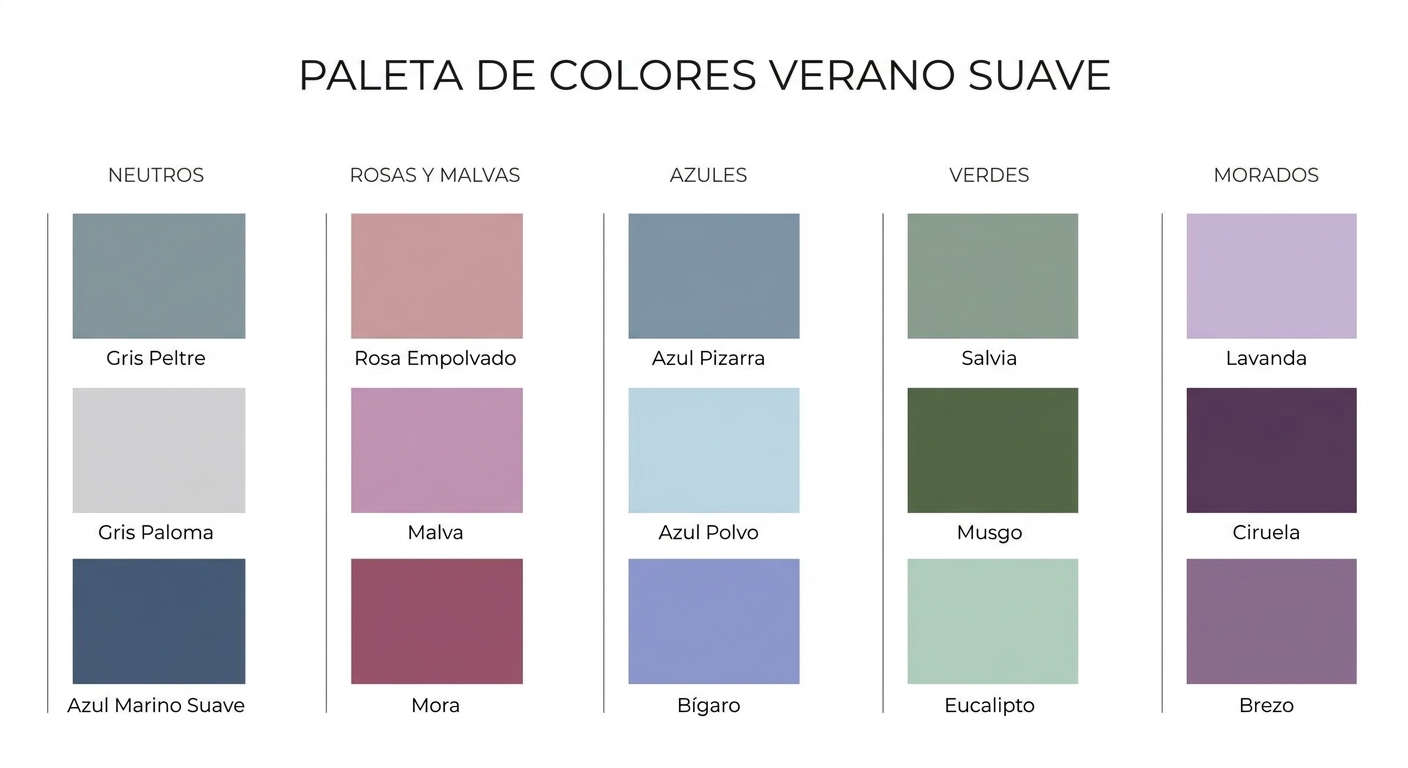
Soft Summer sits at the crossroads of cool, muted, and medium-toned. In the 12-season system, it’s one of the three Summer subtypes — alongside Light Summer and Cool Summer — and it leans into the muted side of the color wheel. Think of a foggy morning by the coast, not a tropical postcard.
The defining quality here is chroma, or how saturated a color is. Soft Summers wear low-chroma colors beautifully. Anything too bright reads as costume, and anything too dark reads as severe. The magic word for your wardrobe is “softened.” Colors that look like they’ve been dusted with a bit of gray.
The three core characteristics
- Cool undertone — your skin has a subtle pink, rose, or neutral-cool cast rather than a golden one.
- Muted chroma — saturated, vivid colors overpower your natural coloring.
- Medium value — neither very light nor very dark; you sit comfortably in the middle.
Soft Summer is often confused with Soft Autumn because both are muted. The difference is undertone: Soft Autumn warms up, Soft Summer cools down. If gold jewelry tends to disappear on you but warms metals also don’t make you glow, you might be sitting in the Soft Summer zone.
How Do You Know If You’re a Soft Summer?

This is the question that sends people down YouTube rabbit holes at 1 a.m. Let’s make it simpler. You’re likely a Soft Summer if several of these ring true:
- Your natural hair color is an ashy brown, dishwater blonde, or muted medium brown — nothing red, nothing jet black.
- Your eyes are gray-blue, gray-green, hazel with a soft quality, or a muted brown that seems to shift in different light.
- Your skin tone is neutral-cool, sometimes with a slight olive undertone, and you tan lightly or burn-then-tan.
- Pure white makes you look tired; off-white feels better.
- Black overwhelms your features and creates harsh shadows under your eyes.
- The “Instagram filter” colors — dusty mauve, sage, slate — make people compliment your skin.
The mirror test you can do today
Stand in natural daylight near a window — north-facing is gold standard. Hold a piece of bright fuchsia fabric under your chin, then swap it for a dusty rose or mauve. Watch what happens in the mirror. The bright fuchsia will likely make your skin look ruddy or pull attention away from your face. The mauve should let your eyes come forward and even out your complexion. That contrast is the whole point of draping, and it’s why pros use color analysis tools instead of guessing.
For a more structured deep-dive into the methodology, the Wikipedia overview of personal color analysis is a solid starting point if you want the history.
The Soft Summer Color Palette in Detail
Now for the fun part — the actual colors. A true Soft Summer palette is wider than people expect. The trick is the quality of the color, not the name. “Pink” doesn’t mean much; “dusty rose with gray underneath” means everything.
Neutrals: your daily backbone
Most Soft Summers do best in soft, slightly cool neutrals. These are the colors that anchor your closet and play nicely with everything else:
- Soft white (think eggshell, not optic white)
- Pewter gray and dove gray
- Taupe with a cool lean
- Cocoa brown — muted, never chocolate
- Charcoal instead of true black
- Soft navy — slightly grayed, not crisp
If you’ve been wearing black blazers your whole career and feel like something’s off, try a charcoal one. The difference on camera and in person can be startling — softer shadows, less harshness around the jaw.
Pinks, roses, and berries
This is where Soft Summers shine. The pinks here are dusty, dusky, and a little sad in the best way. Imagine roses pressed in a book for a year:
- Dusty rose
- Mauve
- Rose brown
- Soft raspberry (more cassis than fruit punch)
- Mulberry
Blues that work
Skip electric blues and royal sapphires. Reach for blues that feel like sea glass or a cloudy lake:
- Powder blue
- Slate blue
- Denim blue (medium, not stonewashed white)
- Periwinkle
- Soft teal
Greens
Greens for Soft Summers stay in the gray-green family. Think eucalyptus leaves on a foggy morning:
- Sage
- Soft jade
- Spruce green
- Moss (cooled down, not yellow-leaning)
Yellows and oranges (handle with care)
Yellow and orange aren’t off-limits, but they have to be heavily softened. Forget marigold, butternut, and pumpkin. Look for:
- Soft buttercream (a touch of yellow, mostly cream)
- Dusty peach
- Salmon — but the muted, washed-out kind
Purples
Purples are a Soft Summer secret weapon. They sit perfectly in the muted-cool sweet spot:
- Lavender
- Plum
- Heather
- Soft aubergine
Colors to Approach With Caution
Every season has its kryptonite. For Soft Summer, the offenders are usually loud, warm, or extreme:
- Pure black — creates harsh contrast against your medium coloring
- Pure white — makes skin look gray or tired
- Bright orange and tomato red — overwhelms and pulls warmth your skin doesn’t have
- Mustard and gold yellow — clashes with the cool undertone
- Electric jewel tones — emerald, cobalt, magenta tend to wear you instead of the other way around
- Camel and warm beige — your face disappears
None of this is a hard rule. If you love a marigold sweater, wear it with a scarf in your best shades near your face. The closer a color is to your skin, the more it matters.
Soft Summer vs. Other Muted Seasons: A Quick Comparison
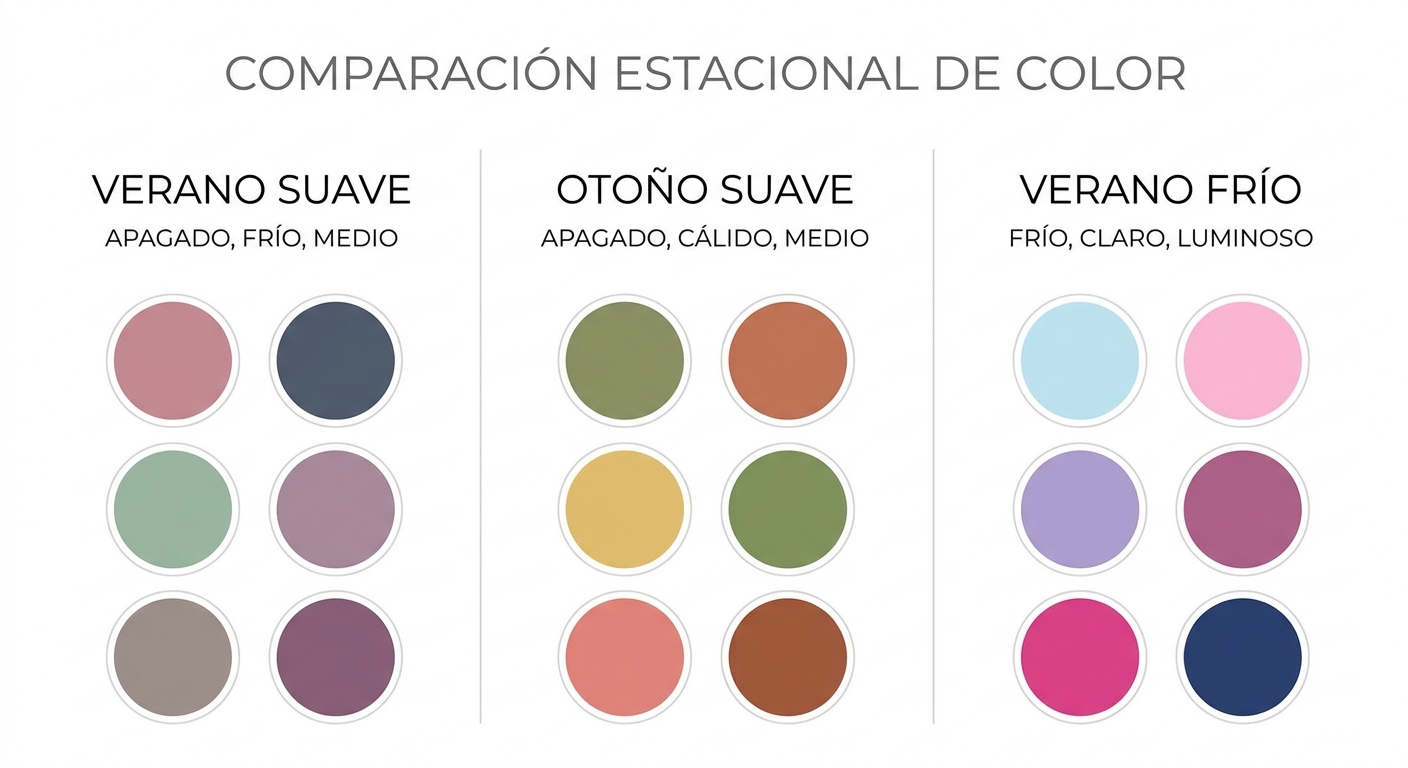
People mistype themselves all the time, especially between the three muted seasons. Here’s a quick reference:
| Season | Undertone | Value | Best Neutrals | Avoid |
|---|---|---|---|---|
| Soft Summer | Cool | Medium | Cocoa, charcoal, soft navy | Warm browns, bright colors |
| Soft Autumn | Warm | Medium | Camel, warm taupe, olive | Cool pastels, icy tones |
| Cool Summer | Cool | Medium | True gray, blue-based navy | Earth tones, mustard |
| Light Summer | Cool | Light | Soft white, pale gray | Dark, heavy colors |
Building a Soft Summer Wardrobe That Actually Works
Knowing your palette is step one. Translating it into clothes you’ll actually wear is step two — and that’s where most people stall. Here’s a practical framework.
Start with three neutrals
Pick three Soft Summer neutrals as your foundation: usually one light (soft white or dove gray), one medium (taupe or cocoa), and one dark (charcoal or soft navy). Build the majority of your tops, bottoms, and outerwear from these. They’ll mix without effort.
Add two “signature” colors
Choose two colors from your palette that make you feel most like yourself — maybe mauve and sage, or slate blue and dusty rose. These become your go-to accents for sweaters, blouses, and statement pieces.
Use accent colors sparingly
The rest of the palette — plum, periwinkle, soft teal — works beautifully as accessories, scarves, and seasonal updates. You don’t need every color in clothing form. Earrings and bag colors count.
A sample capsule for a Soft Summer
- Soft white button-down
- Charcoal blazer
- Dove gray crewneck sweater
- Soft navy trousers
- Mid-wash denim (not too blue, not too white)
- Mauve silk camisole
- Sage cardigan
- Cocoa brown leather flats
- Dusty rose midi dress
- Slate blue scarf for accent
Ten pieces. Roughly thirty outfits if you mix smart. And every single one of them flatters your face without you having to think about it.
Hair, Makeup, and Metals for Soft Summer
Your palette doesn’t stop at clothes. The colors closest to your face — including hair color and makeup — make or break the whole effect.
Hair
Cool, ashy tones are your friend. If you color your hair, avoid warm highlights (honey, copper, golden brown). Instead, ask your colorist for ashy, mushroom, or soft brunette tones. Going lighter than your natural color washes Soft Summers out; staying within two shades of your roots usually keeps things balanced.
Makeup
- Foundation: Neutral-cool or neutral with a hint of pink. Avoid yellow-based foundations.
- Blush: Cool pinks, soft mauves, dusty rose. Skip coral.
- Lipstick: Rose, mauve, soft berry, dusty pink. Nudes should have a pink-brown lean, not a peach one.
- Eyeshadow: Taupe, soft plum, slate, muted teal. Bronzy shadows usually fall flat.
- Eyeliner: Soft brown, slate, or navy instead of black for daytime.
Metals and jewelry
Silver, white gold, and brushed platinum are usually best. Rose gold can work if it leans cool. Yellow gold tends to overwhelm Soft Summer coloring — but if it’s an heirloom you love, wear it on the wrist or neckline edge, not at the earlobe where it sits right next to your face.
Common Mistakes Soft Summers Make
Even after a professional analysis, people drift back into old habits. Watch for these patterns:
- Defaulting to black “because it’s slimming.” Charcoal does the same job without aging you.
- Wearing pure white shirts to work. Soft white or pale gray reads just as professional and far more flattering.
- Buying trend colors out of season. Hot pink, electric orange, cobalt — they look amazing on the hanger and exhausting on you.
- Going too neutral and feeling boring. The fix isn’t brighter; it’s adding more of your palette’s accent colors.
- Mixing warm and cool metals carelessly. Pick a lane near your face.
How Drapes Make This Real
Reading about colors is one thing. Seeing them against your skin is another universe. This is where physical fabric drapes come in — they’re the tool image consultants use because nothing else gives you the same instant, undeniable feedback. You hold a drape under your chin, and the mirror tells you the truth your eyes have been ignoring.
If you want to go past the color names and actually see how Soft Summer tones interact with your skin (versus Autumn, Winter, or Spring tones), our Four-Season Color Analysis Drape Set at $119 is built for exactly that. It covers all four seasons so you can compare across the wheel and confirm where you actually sit, instead of guessing from photos online.
Soft Summer in Real Life: Two Mini Case Studies
Maya, 34, Atlanta
Maya spent a decade in stark black-and-white workwear because that’s what felt “professional.” After a draping session, she swapped her black blazer for charcoal and her white shirts for soft eggshell. Same silhouette, same price points, same closet structure. Within a month, three different coworkers asked if she’d been on vacation. She hadn’t. She’d just stopped fighting her face.
Jen, 51, Seattle
Jen had been dyeing her graying hair a warm chestnut for years and never felt quite right. A stylist gently suggested she let the gray come in and add cool ashy lowlights. The result: a soft silver-brown that read perfectly with her Soft Summer palette. She didn’t need new clothes — her existing closet of dusty roses and slate blues suddenly worked harder than ever.
Seasonal Shopping Tips for 2026
Trend forecasts for 2026 lean into muted earth tones and dusty pastels — good news for Soft Summers. Watch for these in stores:
- Dusty lilac in spring collections
- Sage and mushroom neutrals in everyday basics
- Slate blue replacing navy in workwear
- Soft berry replacing classic red in fall pieces
Skip the loud “dopamine dressing” trend pieces — neon green, hot pink, electric orange. Those colors will be everywhere, and they will not be for you. Stay the course.
Putting It All Together
The thing nobody tells you about color analysis is how much mental energy it gives back. When your closet is built from your real palette, shopping gets faster, getting dressed gets faster, and