
Ever feel like certain colors just *sing* on you, while others leave you looking a little… meh? It’s not your imagination. The right colors can make your skin glow, your eyes sparkle, and your whole face light up. The wrong ones can do the opposite, making you look tired, sallow, or just a bit off. This magic, or lack thereof, is all thanks to the science and art of personal color analysis. While many people are familiar with the basic four-season system, there’s a more nuanced and incredibly empowering approach: the 12 season color analysis system.
This advanced system dives deeper, giving you a truly personalized palette that reflects your unique undertone, value, and chroma. It moves beyond the broad strokes of “Spring,” “Summer,” “Autumn,” or “Winter” to pinpoint your specific sub-season, unlocking a world of colors that genuinely flatter you. Whether you’re an individual curious about your best shades or a professional image consultant looking to refine your skills, understanding the 12-season system is a game-changer.
What is the 12 Season Color Analysis System?
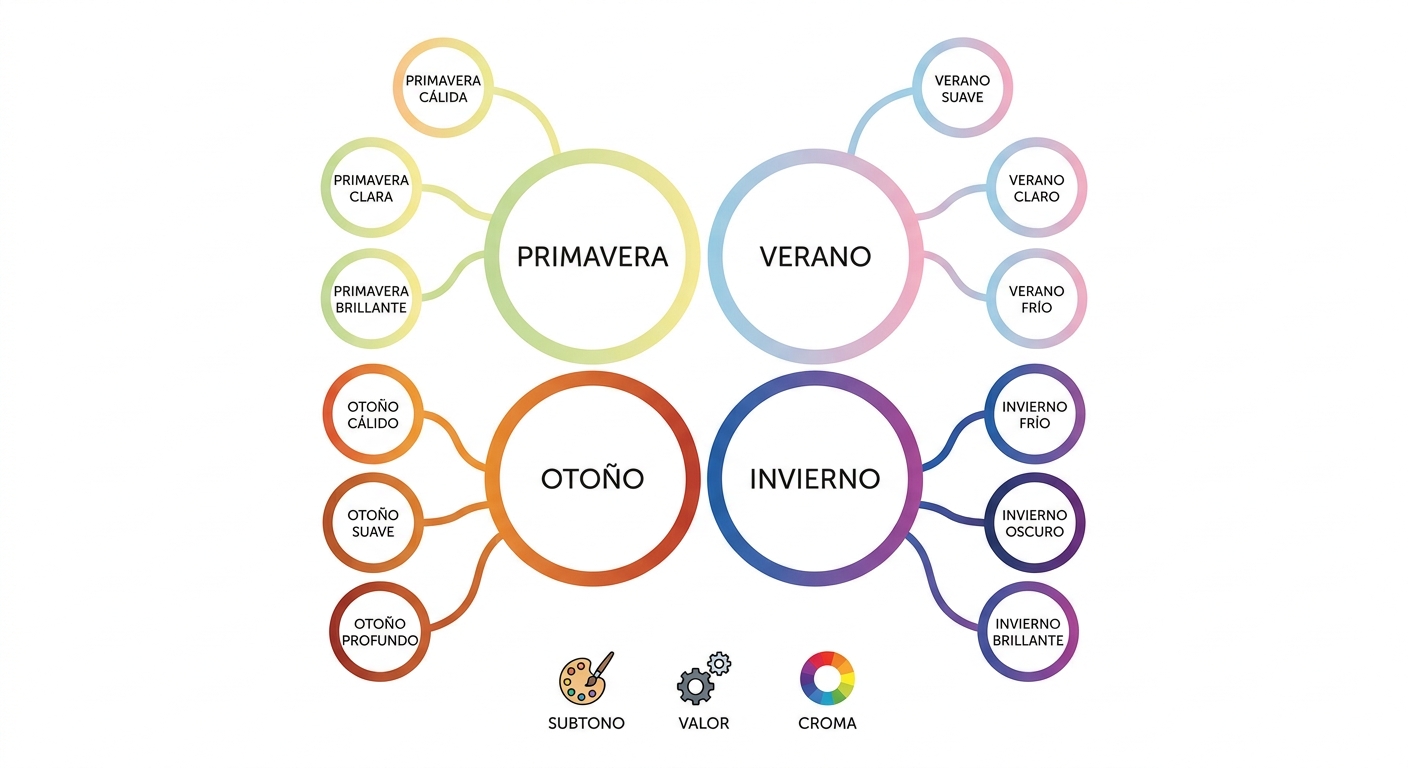
Think of the 12-season system as an evolution of the traditional four-season approach. The classic system categorizes everyone into one of four broad seasons: Spring, Summer, Autumn, or Winter. While a great starting point, it sometimes leaves people feeling like they don’t quite fit. Maybe you’re a Summer, but some Summer colors feel too cool, or too muted. That’s where the 12-season system steps in, offering a more precise fit by breaking each main season into three distinct sub-seasons.
This method considers three primary dimensions of your natural coloring: undertone (warm, cool, or neutral), value (light or dark), and chroma (bright or soft/muted). By analyzing these characteristics, a color consultant can determine which of the 12 palettes harmonizes perfectly with your natural features. It’s like moving from a general clothing size to a custom-tailored outfit – much more precise and flattering.
The Core Principles: Undertone, Value, and Chroma
- Undertone: This is the underlying hue of your skin, independent of its surface color. You’re either warm (golden, peachy), cool (pink, blue, red), or neutral (a balance of both). Your undertone is the most crucial factor in determining whether warm or cool colors suit you best.
- Value: This refers to how light or dark your overall natural coloring is. Do you have light hair, eyes, and skin, or are they all darker? This helps determine if light, medium, or dark colors will create the most balance and vibrancy on you.
- Chroma (or Intensity): This measures how bright or soft (muted) your natural coloring is. Do you have sparkling eyes and vibrant hair that can handle bold, clear colors, or do you have a softer, more blended appearance that shines in gentle, muted tones?
The 12-season system uses these three elements to create a spectrum of palettes, ensuring that everyone can find their perfect color home. It’s a sophisticated way to understand how colors interact with your unique natural beauty.
Breaking Down the 12 Seasons

Let’s take a closer look at each of the 12 seasons. Each one has a dominant characteristic (warm, cool, light, deep, bright, or soft) that guides its palette. Understanding these nuances is key to mastering 12 season color analysis.
The Spring Family (Warm, Light, Bright)
Spring types generally have a warm undertone, light overall value, and a clear, bright quality to their coloring. Think fresh, vibrant, and delicate.
- Warm Spring: Dominantly warm, with a secondary characteristic of brightness. These individuals have a clear, warm glow, often with golden or peachy skin, golden blonde or strawberry blonde hair, and light, bright eyes (often blue, green, or hazel). Their best colors are clear, warm, and medium-light, like peach, coral, clear greens, and golden yellows.
- Light Spring: Dominantly light, with a secondary characteristic of warmth. They have a very delicate, ethereal quality, often with very fair skin, light hair (blonde, light brown), and light eyes. Their palette is soft, light, and warm, including pastel peaches, light aqua, and soft yellows.
- Bright Spring: Dominantly bright, with a secondary characteristic of warmth. These individuals have a striking, clear contrast in their features, with vibrant eyes (often bright blue, green, or hazel), clear skin (sometimes with a peachy undertone), and hair that can range from golden blonde to medium brown. They shine in vivid, clear, warm colors like true red, clear turquoise, and lime green.
The Summer Family (Cool, Light, Soft)
Summer types share a cool undertone, a generally light to medium value, and a soft, muted quality. Their colors are reminiscent of a gentle summer day – serene and blended.
- Cool Summer: Dominantly cool, with a secondary characteristic of softness. These individuals have a delicate, cool complexion, often with rosy or porcelain skin, ash blonde or cool brown hair, and cool-toned eyes (blue, grey, cool hazel). Their palette is cool, soft, and medium-light, featuring colors like periwinkle, lavender, cool pinks, and slate grey.
- Light Summer: Dominantly light, with a secondary characteristic of coolness. Similar to Light Spring but with a cool undertone, these individuals have very light, airy features. Think light, cool skin, ash blonde or light ash brown hair, and light blue or grey eyes. Their best colors are very light, cool, and soft, such as powder blue, pale lavender, and soft rose.
- Soft Summer: Dominantly soft (or muted), with a secondary characteristic of coolness. These individuals have a blended, gentle appearance, often with neutral-cool skin, mousy brown or ash blonde hair, and soft, muted eyes (grey-blue, soft green, hazel). They look fantastic in muted, cool, and medium-light colors like dusty rose, sage green, and soft plum.
The Autumn Family (Warm, Deep, Soft)
Autumn types have a warm undertone, a generally medium to deep value, and a rich, earthy, soft quality. Their palette evokes the cozy, vibrant hues of fall.
- Warm Autumn: Dominantly warm, with a secondary characteristic of depth. These individuals have a rich, golden or bronzed complexion, often with warm brown, auburn, or red hair, and warm eyes (brown, hazel, olive green). Their colors are warm, rich, and medium-dark, including olive green, rust, golden brown, and deep teal.
- Soft Autumn: Dominantly soft (or muted), with a secondary characteristic of warmth. These individuals have a gentle, blended appearance, often with a neutral-warm skin tone, medium brown or golden blonde hair, and soft, warm eyes (hazel, soft brown, olive green). They thrive in muted, warm, and medium-dark colors like moss green, terracotta, and warm grey.
- Deep Autumn: Dominantly deep, with a secondary characteristic of warmth. These individuals have a strong, rich presence, often with deep olive or golden-tan skin, dark brown or black hair (with warm highlights), and deep, warm eyes (dark brown, black-brown, deep olive). Their best colors are deep, rich, and warm, such as forest green, deep burgundy, and dark chocolate brown.
The Winter Family (Cool, Deep, Bright)
Winter types share a cool undertone, a generally deep value, and a clear, striking quality. Their palette is bold, vibrant, and often features high contrast.
- Cool Winter: Dominantly cool, with a secondary characteristic of brightness. These individuals have a clear, cool complexion, often with porcelain or olive skin (with cool undertones), dark cool brown or black hair, and cool eyes (true blue, violet, black-brown). Their colors are cool, clear, and medium-dark to dark, including true fuchsia, royal blue, emerald green, and stark white.
- Deep Winter: Dominantly deep, with a secondary characteristic of coolness. These individuals have a strong, dramatic presence, often with deep olive, cool tan, or dark skin, very dark brown or black hair, and deep, intense eyes (dark brown, black, deep hazel). They look stunning in deep, rich, and cool colors like black, deep purple, true red, and charcoal grey.
- Bright Winter: Dominantly bright, with a secondary characteristic of coolness. These individuals have a vivid, high-contrast appearance, often with clear, cool skin, dark hair, and sparkling, intense eyes (bright blue, emerald green, violet). Their palette is bold, clear, and cool, featuring colors like shocking pink, electric blue, pure white, and black.
Why Choose 12 Season Color Analysis?
The beauty of the 12-season system lies in its precision. If you’ve ever felt like you “almost” fit into a four-season category, this system is likely your answer. It acknowledges the subtle variations in human coloring, ensuring a more accurate and satisfying result. For personal stylists and image consultants, this advanced methodology allows you to offer a superior service, helping your clients truly understand their unique beauty.
For individuals, knowing your 12-season palette means:
- Effortless Wardrobe Building: Every item you buy will work together, making dressing a breeze.
- Looking Younger and Healthier: The right colors minimize imperfections, reduce the appearance of dark circles, and give your skin a natural radiance.
- Confident Shopping: No more guessing games! You’ll know exactly what to look for and what to avoid, saving you time and money.
- Empowered Self-Expression: Your colors are a part of your authentic self. Embracing them allows you to express your true style with confidence.
Imagine walking into a store and instantly knowing which racks to gravitate towards. Or opening your closet and seeing only clothes that make you feel fantastic. That’s the power of 12 season color analysis.
How is 12 Season Color Analysis Performed?
A professional personal color analysis session, especially one using the 12-season system, is a fascinating and illuminating experience. Here’s a general idea of what to expect:
- No Makeup Zone: You’ll typically be asked to arrive without makeup, allowing the consultant to see your natural skin tone, eye color, and hair color without interference.
- Natural Light is Key: The analysis is always done in natural, indirect light to ensure the most accurate color perception.
- The Draping Process: This is where the magic happens! The consultant will systematically drape various colored fabrics (known as color analysis drapes) around your shoulders, observing how each color interacts with your skin, eyes, and hair. They’ll look for colors that make you glow, minimize shadows, and enhance your features, as well as those that drain your color or create harshness.
- Focus on Undertone, Value, and Chroma: The consultant will use specialized drapes to determine your dominant characteristic first (e.g., are you primarily warm or cool? Light or deep? Bright or soft?). This helps narrow down the possibilities.
- Identifying Your Sub-Season: Once your primary characteristic is clear, the consultant will use more refined drape sets to pinpoint your specific sub-season within the 12-season framework. For example, if you’re a Summer, they’ll use drapes to determine if you are a Light Summer, Cool Summer, or Soft Summer.
- Your Personalized Palette: At the end of the session, you’ll receive a personalized color palette, often in the form of fabric swatches or a digital guide, with your best colors for clothing, makeup, and even hair color.
For image consultants, having a comprehensive set of color analysis drapes is essential. While a Four-Season Color Analysis Drape Set ($119) is an excellent starting point for understanding the basics, a complete 12-season drape set allows for the precision needed to identify each sub-season accurately. These professional tools, often made from high-quality fabric, are critical for a successful draping session. Many consultants also use color analysis frames or rigid frames to help isolate colors during a consultation, ensuring a clear and unbiased assessment.
Can You Do a DIY 12 Season Color Analysis?
While a professional consultation provides the most accurate results, you can certainly start exploring the concepts of 12 season color analysis on your own. Here are some tips:
- Gather Your Tools: You’ll need a good mirror, natural daylight (no yellow bathroom lights!), and various colored fabrics or clothing items. Try to find items in clear red, true blue, golden yellow, cool pink, olive green, and bright orange to test different undertones and chroma levels.
- Strip Down: Remove all makeup and pull your hair back. You want to see your natural coloring.
- Observe Your Undertone: Hold a piece of true gold fabric and then a piece of true silver fabric next to your face. Does gold make you glow and silver look dull? You’re likely warm. Does silver make you sparkle and gold look off? You’re probably cool. If both look decent, you might be neutral.
- Test Value and Chroma: Hold up very light colors, very dark colors, very bright colors, and very muted colors. Which ones make your skin look radiant and which ones wash you out or overwhelm you?
- Look for Harmony: The goal isn’t just to find “good” colors, but colors that blend harmoniously with your natural features, making you look vibrant and healthy without the color itself being the focal point.
Keep in mind that self-draping can be tricky because it’s hard to be objective. Our brains often play tricks on us, and we might be drawn to colors we like rather than colors that truly flatter us. A professional eye, especially one trained with high-quality color drapes and analysis frames, can spot nuances you might miss.
Common Misconceptions About Color Analysis
Let’s clear up a few things about 12 season color analysis:
| Misconception | The Reality |
|---|---|
| “I can only wear one color palette.” | Not true! Your 12-season palette gives you a wide range of colors. You’ll have many options for clothing, accessories, and makeup. |
| “It’s just about what colors I ‘like’.” | While personal preference matters, color analysis is about what colors *flatter* your natural features, making you look your best. |
| “My skin color determines my season.” | Your surface skin color (light, medium, dark) is only one factor. Undertone, value, and chroma are more critical. People of all ethnicities can belong to any season. |
| “I’m stuck with these colors forever.” | Your natural coloring doesn’t change significantly over time, even with age or hair dye. Your core palette remains the same, though you might adjust intensity as you get older. |
| “It’s only for fashionistas.” | Color analysis is for anyone who wants to look and feel their best, regardless of their interest in “fashion.” It’s about personal harmony. |
Understanding these points helps demystify the process and makes it more accessible for everyone. It’s not about strict rules, but about empowering knowledge.
Becoming a Professional Color Consultant
For aspiring or current image consultants and personal stylists, mastering the 12-season system is a significant step towards offering a more nuanced and valuable service. The demand for precise personal color analysis (PCA) is growing, and clients appreciate the depth this system provides.
Key tools for professionals include:
- Comprehensive Drape Sets: Investing in a high-quality 12-season drape set is crucial. These fabric drapes are the core of your consultation.
- Color Analysis Frames: Rigid frames help consultants isolate colors and prevent surrounding colors from influencing perception during a draping session.
- Training and Certification: Organizations like AICI (Association of Image Consultants International) offer resources and training that can enhance your expertise.
- Continued Learning: The world of color is always evolving. Staying updated on trends and methodologies ensures you remain a top authority.
Offering 12-season color analysis can elevate your business, attract a wider range of clients, and establish you as an expert in the field. It allows you to guide clients not just to “good” colors, but to their *perfect* colors.
Embrace Your Best Colors
The journey into 12 season color analysis is an exciting one, whether you’re uncovering your own personal palette or guiding others to theirs. It’s about more than just clothes; it’s about confidence, self-expression, and embracing the unique beauty that is yours alone. Knowing your best colors simplifies your life, enhances your appearance, and empowers you to step out into the world feeling truly radiant.
So, next time you’re standing in front of your closet, wondering why that one shirt just doesn’t quite work, remember the power of color analysis. It’s an investment in yourself, an understanding of your natural harmony, and a path to a more vibrant you. Ready to explore the tools that bring this magic to life? Check out Element & Style USA’s professional color analysis drapes and other tools designed to make every color consultation a success.