
Ever bought a new lipstick that looked amazing in the store, only to get home and wonder what went wrong? Or maybe you’ve tried a trendy eyeshadow palette that just seemed to wash you out, even though it looked fantastic on your favorite influencer. It’s a common frustration, and often, the answer lies not in the makeup itself, but in how it harmonizes with your unique personal coloring. Understanding your color season is a game-changer for your wardrobe, and it’s equally powerful when it comes to choosing the perfect makeup by color season.
Think of your skin, hair, and eye color as a natural palette. When your makeup choices align with this inherent palette, everything clicks. You look more vibrant, more rested, and effortlessly put-together. It’s not about following strict rules, but about discovering the shades that enhance your natural beauty rather than competing with it. Let’s dive into how your personal color analysis can transform your makeup bag.
What is Personal Color Analysis, Anyway?
Before we get too deep into makeup, let’s quickly touch on personal color analysis (PCA). If you’ve been curious about why certain colors make you glow and others make you look tired, PCA is your answer. It’s a system that categorizes your natural coloring into “seasons” (Spring, Summer, Autumn, Winter), and often further into sub-seasons like Bright Spring or Deep Winter. This helps you identify your core color characteristics: your undertone (warm, cool, or neutral), your value (light or dark), and your chroma (bright or muted).
A professional color analysis session typically involves draping — using specially designed 4 Seasons Drapes, which are fabric swatches in various colors, to see how different hues react with your skin. These drapes, like our foundational set for $149, are the professional tool of choice for image consultants and stylists. They reveal your best colors, and once you know your season, you have a personalized guide for everything from clothes to accessories, and yes, even your makeup.
Why Does Your Color Season Matter for Makeup?
Your color season provides a blueprint for the most flattering shades of makeup. It’s not about being restrictive; it’s about being strategic. When you wear makeup colors that clash with your natural undertone or value, they can:
- Make your skin look sallow or ruddy.
- Emphasize dark circles or blemishes.
- Wash out your features.
- Make you look older or tired.
On the flip side, when your makeup aligns with your season, you’ll notice:
- A healthy, radiant glow.
- Your eyes appear brighter and more defined.
- Your skin tone looks more even and clear.
- An overall harmonious and polished appearance.
It’s about enhancing, not masking. Your makeup should feel like a natural extension of you, not a separate entity. Let’s break down how each color season approaches makeup.
Makeup by Color Season: A Guide to Your Best Shades
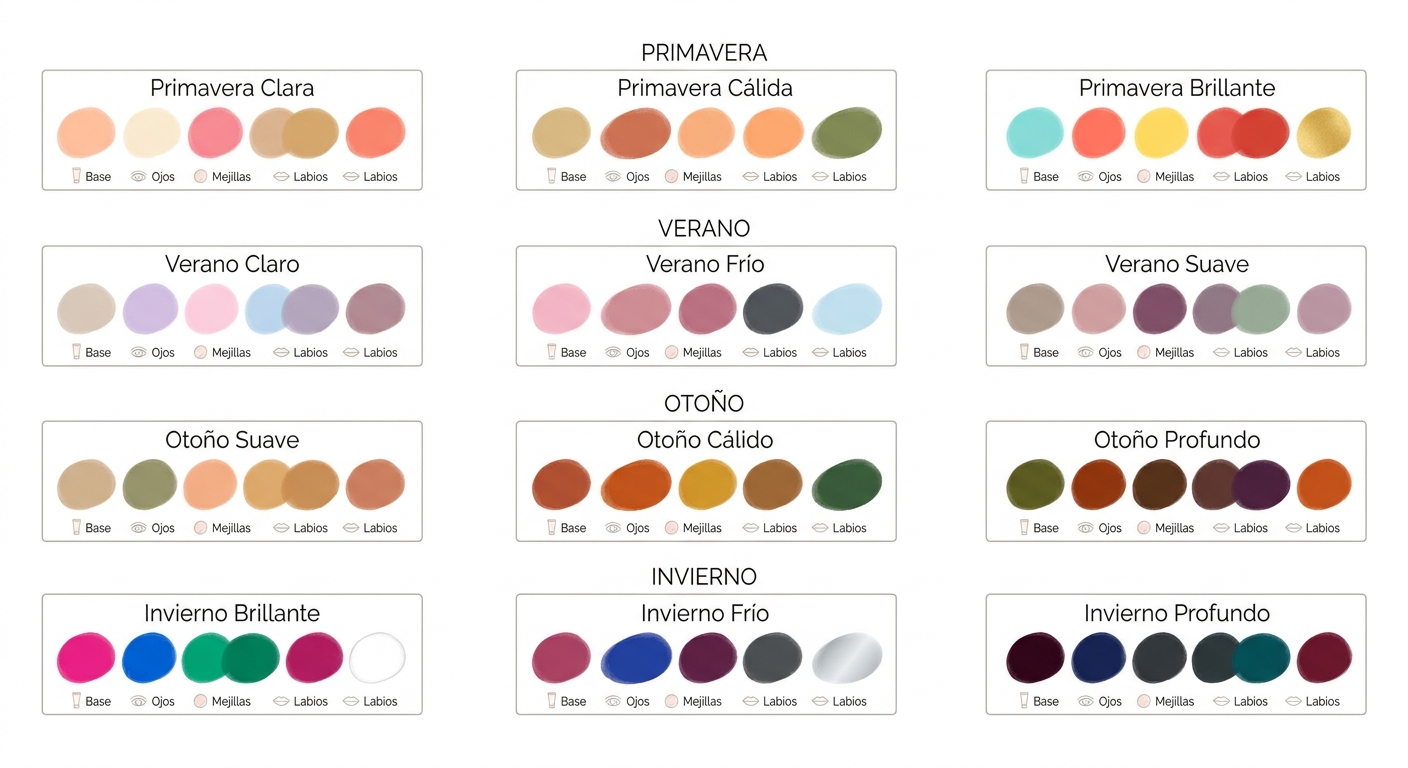
While every individual within a season is unique, there are general guidelines that will help you narrow down your choices and find your most flattering shades. We’ll look at the 12-season system, which offers a nuanced approach to personal coloring.
Spring Seasons: Fresh, Light, and Luminous Makeup
Spring types have a warm, clear, and often light overall appearance. Their makeup should reflect this fresh, delicate, and vibrant quality. Think of the first blooms of spring – clear, warm, and joyful.
Light Spring Makeup
- Characteristics: Light overall value, warm undertones, soft chroma.
- Foundation/Concealer: Light, warm-toned foundations that let your natural glow shine through. Avoid anything too heavy or cool.
- Eyeshadows: Soft, warm neutrals like peach, light gold, champagne, and warm beige. For a pop of color, try light aqua, coral, or warm greens.
- Eyeliner/Mascara: Brown, warm grey, or even a soft navy for a gentle definition. Black can be too harsh.
- Blush: Warm pinks, coral, and peach shades applied lightly to the apples of the cheeks for a fresh flush.
- Lipstick: Light, warm shades like coral, peach, apricot, and warm pinks. Glossy finishes work beautifully.
Warm Spring Makeup
- Characteristics: Clearly warm undertones, medium value, bright chroma.
- Foundation/Concealer: Warm, golden-toned foundations that match your skin’s inherent warmth.
- Eyeshadows: Warm browns, golden bronzes, olive green, warm peach, and clear yellow-greens.
- Eyeliner/Mascara: Warm brown, deep olive, or a rich bronze. Black is often too severe; opt for a softer alternative.
- Blush: Vibrant peach, warm coral, and golden-orange shades.
- Lipstick: Clear, warm shades like true coral, poppy red, warm orange-red, and vibrant peach.
Bright Spring Makeup
- Characteristics: Bright chroma, warm-neutral undertones, medium value.
- Foundation/Concealer: Neutral-warm foundations that provide a clear, even base.
- Eyeshadows: Clear, vibrant shades like turquoise, emerald green, fuchsia, and bright coral. Neutrals should be bright and clear, like a bright taupe or champagne.
- Eyeliner/Mascara: Black or deep brown for maximum definition.
- Blush: Clear, bright pinks or corals.
- Lipstick: Bold, clear, and vibrant colors such as fuchsia, bright red, clear coral, and hot pink.
Summer Seasons: Soft, Cool, and Romantic Makeup
Summer types have a cool, muted, and often delicate appearance. Their makeup should be soft, understated, and elegant, mirroring the gentle, hazy quality of a summer day.
Light Summer Makeup
- Characteristics: Light overall value, cool undertones, soft chroma.
- Foundation/Concealer: Light, cool-toned foundations that create a smooth, porcelain-like finish.
- Eyeshadows: Soft, cool shades like pastel pink, lavender, cool grey, soft blue, and muted plum.
- Eyeliner/Mascara: Soft grey, taupe, or a muted navy. Black can be too harsh against your delicate coloring.
- Blush: Soft, cool pinks or berry shades, applied gently.
- Lipstick: Muted cool pinks, rose, and soft berry shades. Avoid anything too warm or vibrant.
Cool Summer Makeup
- Characteristics: Clearly cool undertones, medium value, soft chroma.
- Foundation/Concealer: Cool-toned foundations that complement your rosy undertones.
- Eyeshadows: Cool, medium shades like slate grey, dusty rose, periwinkle, plum, and cool teal.
- Eyeliner/Mascara: Charcoal grey, deep plum, or a cool brown. Black can be used, but with a light hand.
- Blush: Cool rose, berry, or plum shades.
- Lipstick: Medium cool pinks, rose, raspberry, and muted berry colors.
Soft Summer Makeup (Muted Summer)
- Characteristics: Muted chroma, cool-neutral undertones, medium value.
- Foundation/Concealer: Neutral-cool foundations that blend seamlessly with your skin, avoiding anything too yellow.
- Eyeshadows: Muted, smoky shades like dusty taupe, soft sage, muted plum, and charcoal grey.
- Eyeliner/Mascara: Soft black, charcoal, or deep muted brown.
- Blush: Muted rose, dusty pink, or soft berry.
- Lipstick: Soft rose, muted berry, and plum-brown shades. Avoid bright or overly warm colors.
Autumn Seasons: Rich, Earthy, and Warm Makeup
Autumn types possess a warm, rich, and often deep overall appearance. Their makeup should be earthy, sophisticated, and warm, reflecting the cozy, abundant feel of autumn leaves.
Soft Autumn Makeup (Muted Autumn)
- Characteristics: Muted chroma, warm-neutral undertones, medium value.
- Foundation/Concealer: Neutral-warm foundations that enhance your natural warmth without being too yellow.
- Eyeshadows: Muted, earthy shades like olive green, moss green, deep taupe, warm browns, and muted plum.
- Eyeliner/Mascara: Soft black, deep olive, or rich brown.
- Blush: Muted peach, terracotta, or soft brick red.
- Lipstick: Muted coral, soft brick red, spiced peach, and warm rose.
Warm Autumn Makeup
- Characteristics: Clearly warm undertones, medium-dark value, soft chroma.
- Foundation/Concealer: Warm, golden, or olive-toned foundations that match your rich complexion.
- Eyeshadows: Rich, warm shades like deep olive, bronze, copper, warm brown, and goldenrod.
- Eyeliner/Mascara: Warm deep brown, olive green, or bronze. Black can be too stark; opt for softer darks.
- Blush: Terracotta, deep peach, or warm brick red.
- Lipstick: Rich, warm shades like terracotta, rust, deep coral, and warm brick red.
Deep Autumn Makeup
- Characteristics: Deep overall value, warm-neutral undertones, rich chroma.
- Foundation/Concealer: Neutral-warm foundations that provide a strong, even base for your deep coloring.
- Eyeshadows: Deep, rich shades like forest green, deep teal, dark chocolate brown, aubergine, and deep bronze.
- Eyeliner/Mascara: Deep black, rich dark brown, or deep forest green.
- Blush: Deep terracotta, plum, or berry shades.
- Lipstick: Deep, rich shades like true red, deep berry, plum, and deep rust.
Winter Seasons: Bold, Cool, and Dramatic Makeup
Winter types have a cool, clear, and often deep overall appearance. Their makeup should be bold, crisp, and dramatic, mirroring the stark contrasts and clarity of a winter landscape.
Deep Winter Makeup
- Characteristics: Deep overall value, cool-neutral undertones, clear chroma.
- Foundation/Concealer: Neutral-cool foundations that provide a crisp, clean base.
- Eyeshadows: Deep, cool shades like charcoal grey, deep navy, emerald green, true purple, and stark white for contrast.
- Eyeliner/Mascara: True black for maximum impact.
- Blush: Deep plum, fuchsia, or strong berry.
- Lipstick: Deep, clear shades like true red, deep berry, plum, and fuchsia.
Cool Winter Makeup
- Characteristics: Clearly cool undertones, medium-dark value, clear chroma.
- Foundation/Concealer: Cool-toned foundations that complement your rosy or olive-cool undertones.
- Eyeshadows: Cool, clear shades like true grey, cool blue, fuchsia, emerald green, and deep purple.
- Eyeliner/Mascara: True black.
- Blush: Clear, cool pinks, fuchsia, or berry shades.
- Lipstick: Clear, cool reds, fuchsia, magenta, and true berry.
Bright Winter Makeup
- Characteristics: Bright chroma, cool-neutral undertones, medium value.
- Foundation/Concealer: Neutral-cool foundations that give a vibrant, clear finish.
- Eyeshadows: Clear, vivid shades like electric blue, emerald green, fuchsia, bright purple, and stark white for contrast.
- Eyeliner/Mascara: Intense black.
- Blush: Bright, clear pinks or fuchsia.
- Lipstick: Bold, clear, and vibrant shades like true red, fuchsia, hot pink, and magenta.
Beyond the Basics: Tips for Applying Makeup by Color Season
Knowing your seasonal palette is a fantastic starting point, but here are some additional tips to help you master your makeup game, regardless of your season:
1. Focus on Undertone First
Your undertone (warm, cool, or neutral) is the most critical factor for foundation, concealer, and often blush and lipstick. If these don’t align, the rest of your makeup won’t look right. Always test foundation shades on your jawline in natural light to ensure a seamless match.
2. Consider Your Natural Contrast
Some seasons (like Bright Winter or Deep Autumn) have naturally high contrast between their hair, skin, and eyes. They can handle bolder makeup looks. Others (like Light Summer or Soft Autumn) have lower contrast and look best with softer, more blended makeup. Don’t try to force a high-contrast look on a low-contrast season, or vice versa.
3. Don’t Forget Your Eyes and Hair
While skin undertone is primary, your eye and hair color also play a role. For example, a Warm Autumn with green eyes might lean into more olive and bronze eyeshadows, while one with warm brown eyes might favor coppers and golds. Your overall appearance is the sum of these parts.
4. Embrace Your Best Metals
Just like with jewelry, your color season guides your best metallic makeup shades. Warm seasons (Spring, Autumn) glow in gold, bronze, and copper. Cool seasons (Summer, Winter) shine in silver, pewter, and rose gold. Neutral seasons can often wear both, but usually lean slightly one way or the other.
5. The Power of Neutral Shades
Every season has its own range of best neutral shades. For a Spring, a warm beige or light taupe might be a perfect neutral eyeshadow. For a Summer, a cool grey or dusty rose. For an Autumn, a rich brown or olive. For a Winter, a charcoal or stark white. These are your everyday workhorses that create a harmonious base for any look.
6. Experiment with Your “Wow” Colors
Once you’ve mastered your neutrals, don’t be afraid to try your “wow” colors – those vibrant, clear shades from your palette that truly make your eyes pop or your lips sing. For a Bright Winter, that might be a fuchsia lipstick; for a Warm Spring, a coral blush. These are your showstoppers.
7. Less is Often More
Especially for lighter or softer seasons, a light hand with makeup is key. You want to enhance your delicate features, not overpower them. Even for dramatic seasons, strategic application is more impactful than heavy layers.
8. Consider the Occasion
While your season guides your best colors, the occasion and your personal style also matter. A Deep Winter might opt for a softer look for a daytime casual event, but still within their cool, clear palette (e.g., a deep berry lip instead of a stark red). Personal color analysis is a guide, not a dictator!
Table: Quick Guide to Key Makeup Characteristics by Season
| Season Family | Undertone | Value | Chroma | Best Lipsticks (General) | Best Eyeshadows (General) |
|---|---|---|---|---|---|
| Spring | Warm | Light-Medium | Clear/Bright | Coral, Peach, Warm Pink | Peach, Gold, Warm Beige, Light Green |
| Summer | Cool | Light-Medium | Soft/Muted | Cool Pink, Rose, Berry | Cool Grey, Lavender, Soft Blue, Muted Plum |
| Autumn | Warm | Medium-Deep | Soft/Muted | Terracotta, Rust, Deep Coral, Warm Red | Olive, Bronze, Copper, Warm Brown, Sage |
| Winter | Cool | Medium-Deep | Clear/Bright | True Red, Fuchsia, Berry, Plum | Charcoal, Navy, Emerald, True Purple, Black |
Ready to Discover Your Best Makeup by Color Season?
Finding your color season truly unlocks a new level of confidence in your personal style, and that definitely extends to your makeup choices. No more guessing games or wasted purchases! When you know which shades make you shine, getting ready becomes a joy, and you’ll always look your best.
If you’re eager to pinpoint your exact color season and get a personalized palette for all your style needs, consider exploring a professional color analysis. It’s an investment in yourself that pays dividends every time you open your closet or your makeup bag. To start your journey, you can even explore our free online color analysis tools to get a preliminary idea of your best shades, and then dive deeper with professional guidance. Knowing your best makeup by color season is truly the foundation of a harmonious and radiant look.